How to Tell If Your Jewelry Is Real Gold or Silver
Whether you’ve inherited a piece of jewelry, found something tucked away in a drawer, or are thinking about selling, one question comes up often:
Is this real gold or silver?
Understanding how to identify genuine precious metals can help you avoid undervaluing your items—or falling for imitations. At Gems ‘N Loans, many customers come in unsure of what they have, and a little knowledge can go a long way before you step into a shop.
Here’s a practical guide to help you test, verify, and better understand your gold and silver jewelry.
Why It Matters to Verify Real Gold or Silver
Gold and silver hold intrinsic value, but not all jewelry is made from solid precious metals. Some pieces are:
- Gold-plated or silver-plated
- Made from mixed alloys
- Completely imitation
Knowing what you have helps you:
- Get accurate resale value
- Avoid scams or misleading buyers
- Make informed decisions before selling
1. Check for Hallmarks or Stamps
One of the easiest ways to start is by looking for small markings on your jewelry.
Common gold markings:
- 10K, 14K, 18K, 24K (indicates purity level)
- 585 (14K), 750 (18K)
Common silver markings:
- 925 (sterling silver)
- Sterling or Ster
These stamps are often found on clasps, inner bands, or the back of pieces. Keep in mind:
Marks can sometimes be faked or worn down, so this should be your
first step—not your only test.
2. The Magnet Test
A quick at-home method is using a magnet.
- Real gold and silver are not magnetic
- If your jewelry strongly sticks to a magnet, it likely contains other metals
This is a simple screening tool, but not definitive—some non-precious metals are also non-magnetic.
3. The Weight and Feel Test
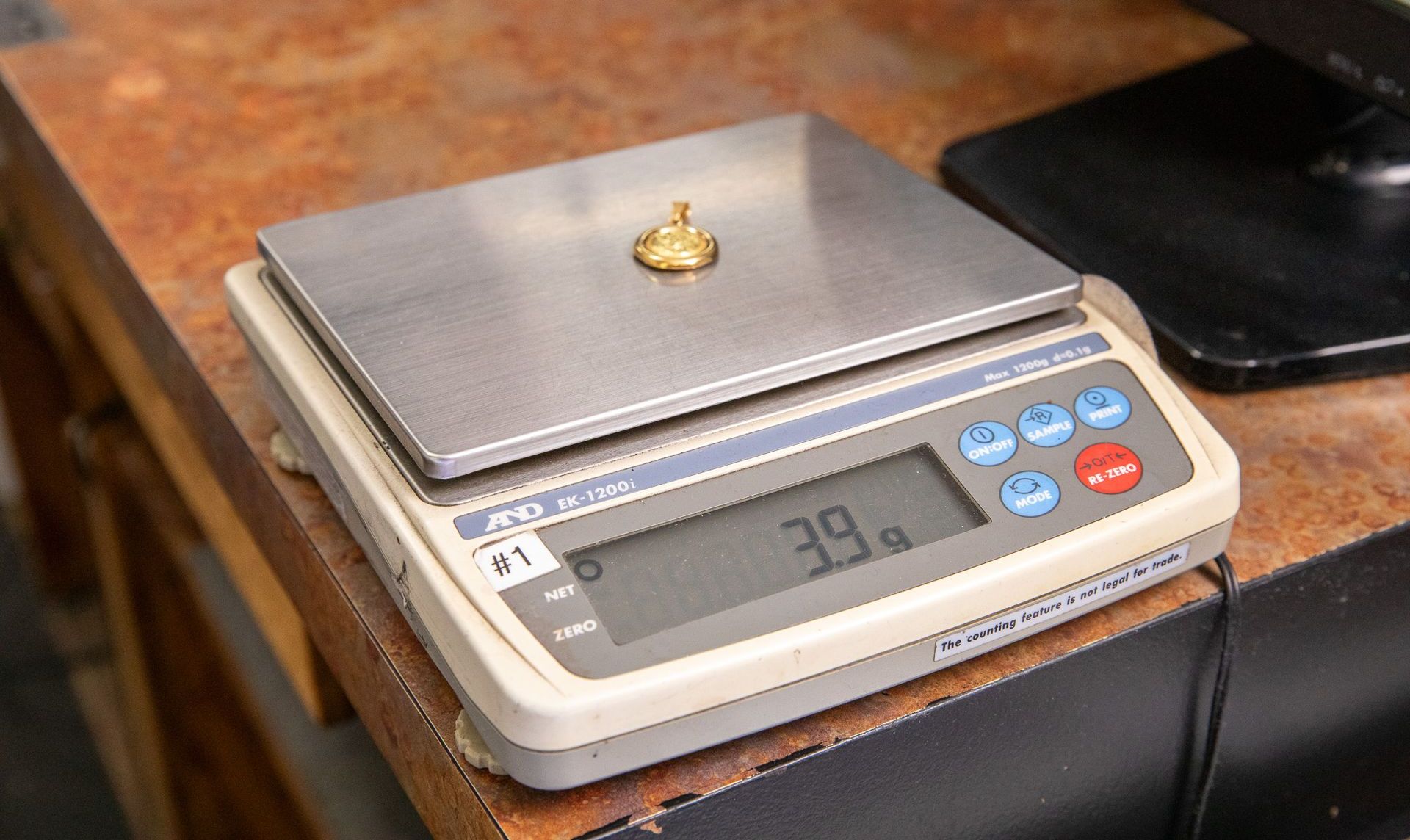
Precious metals are dense and have a noticeable weight.
- Real gold feels heavier than it looks
- Silver also has a solid, substantial feel
If a piece feels unusually light for its size, it may be plated or imitation.
4. The Acid Test (Professional Verification)
The real gold test most commonly used by professionals involves applying a small drop of acid to the metal to observe its reaction.
- Real gold will not react or discolor
- Fake or lower-quality metals may change color
This test should be done carefully—ideally by a professional—to avoid damaging your jewelry.
5. The Ceramic Scratch Test (Use With Caution)
You can lightly rub the piece against an unglazed ceramic surface:
- Gold: leaves a gold-colored streak
- Fake metals: may leave black or gray marks
This method can scratch your jewelry, so it’s best used cautiously or avoided for valuable items.
6. Look for Tarnishing (Especially for Silver)
Real silver can tarnish over time, developing a darker patina. This is actually a sign of authenticity.
- Genuine silver: tarnishes but can be polished
- Fake silver: may not tarnish or may show green/black corrosion
7. Get a Professional Evaluation
At-home tests can give you clues, but they’re not always conclusive.
The most reliable way to verify gold in North County or confirm genuine silver in San Diego is to have your jewelry inspected by a professional.
At Gems ‘N Loans, trained experts use specialized tools and testing methods to:
- Accurately determine metal purity
- Identify plated vs solid pieces
- Provide fair, transparent valuations
Common Mistakes to Avoid
When trying to authenticate jewelry, people often:
- Rely on just one test
- Assume all stamped jewelry is real
- Damage items with improper testing
- Underestimate the value of older pieces
A combination of methods—and professional verification—is always the safest approach.
Final Thoughts: Know Before You Sell
If you’re thinking about selling jewelry, knowing whether it’s real gold or silver is the first step toward getting the value you deserve.
While simple at-home tests can help you get an idea, nothing replaces expert evaluation. Whether you’re a first-time seller or a collector, taking the time to verify your jewelry ensures you make confident, informed decisions.